

Calvin Coolidge (1872-1933) — Governor of Massachusetts, Vice President of the United States, and 30th President of the United States:
The foundations of our society and our government rest so much on the teachings of the Bible that it would be difficult to support them if faith in these teachings would cease to be practically universal in our country.57
57) Cal Thomas, “Silent Cal Speaks: Why Calvin Coolidge is the Model for Conservative Leadership Today,” www.heritage.org/Research/Lecture/Silent-Cal-Speaks-Why-Calvin-Coolidge.
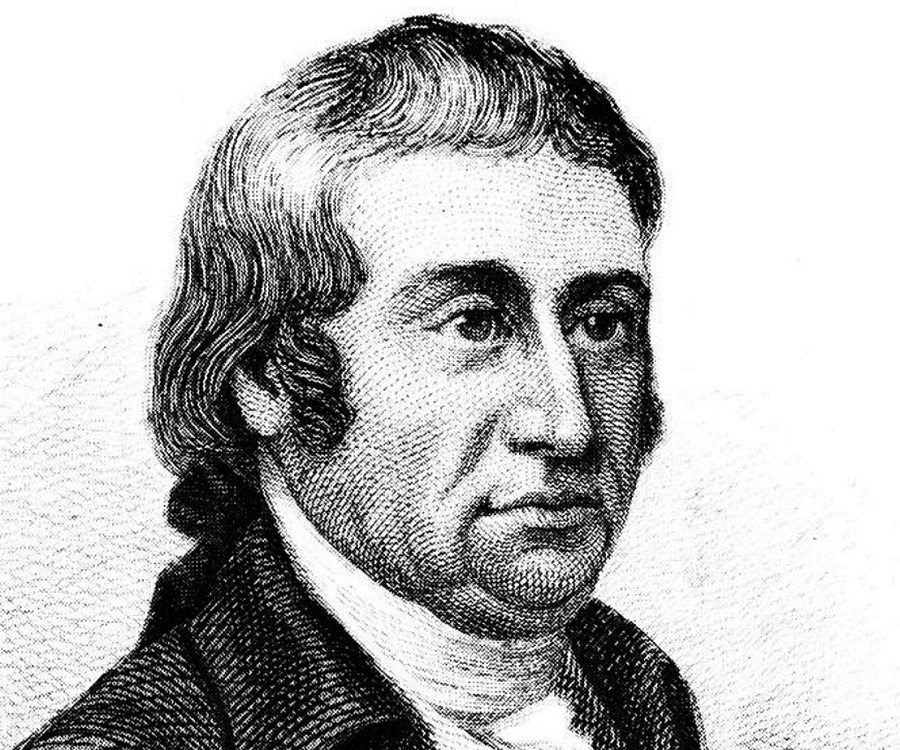
Josiah Bartlet --- Physician, Military Officer, signer of the Declaration of Independence, Judge, Governor of New Hampshire.
Called on the people of New Hampshire . . . to confess before God their aggravated transgressions and to implore His pardon and forgiveness through the merits and mediation of Jesus Christ . . . [t]hat the knowledge of the Gospel of Jesus Christ may be made known to all nations, pure and undefiled religion universally prevail, and the earth be fill with the glory of the Lord.62
62) Josiah Bartlett, Proclamation for a Day of Fasting and Prayer, March 17, 1792.
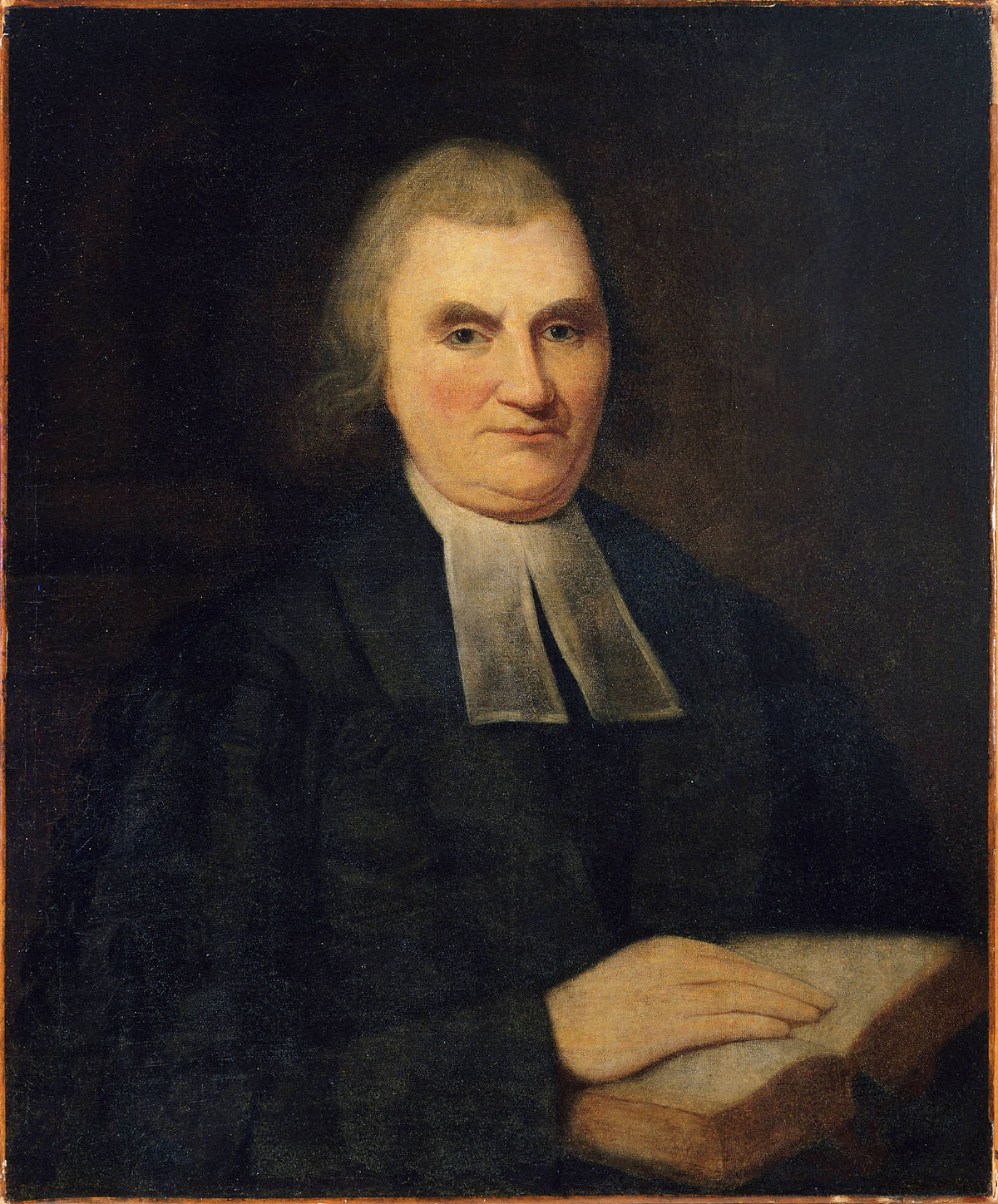
John Witherspoon --- Signer of the Declaration of Independence; ratifier of the U. S. Constitution; President of Princeton
[C]hrist Jesus – the promise of old made unto the fathers, the hope of Israel [Acts 28:20], the light of the world [John 8:12], and the end of the law for righteousness to every one that believeth [Romans 10:4] – is the only Savior of sinners, in opposition to all false religions and every uninstituted rite; as He Himself says (John 14:6): “I am the way, and the truth, and the life: no man cometh unto the Father but by Me.”77
[N]o man, whatever be his character or whatever be his hope, shall enter into rest unless he be reconciled to God though Jesus Christ.78
[T]here is no salvation in any other than in Jesus Christ of Nazareth.79
I shall now conclude my discourse by preaching this Savior to all who hear me, and entreating you in the most earnest manner to believe in Jesus Christ; for “there is no salvation in any other” [Acts 4:12].80
It is very evident that both the prophets in the Old Testament and the apostles in the New are at great pains to give us a view of the glory and dignity of the person of Christ. With what magnificent titles is He adorned! What glorious attributes are ascribed to him!… All these conspire to teach us that He is truly and properly God – God over all, blessed forever!81
[I]f you are not rec¬onciled to God through Jesus Christ – if you are not clothed with the spotless robe of His righteousness – you must forever perish.82
[H]e is the best friend to American liberty who is the most sincere and active in promoting true and undefiled religion, and who sets himself with the greatest firmness to bear down profanity and immorality of every kind. Whoever is an avowed enemy of God, I scruple not to call him an enemy to his country.83
77) John Witherspoon, The Works of John Witherspoon (Edinburgh: J. Ogle, 1815), Vol. V, p. 255, Sermon 15, “The Absolute Necessity of Salvation Through Christ,” January 2, 1758.
78) John Witherspoon, The Works of John Witherspoon (Edinburgh: J. Ogle, 1815), Vol. V, p. 245, Sermon 15, “The Absolute Necessity of Salvation Through Christ,” January 2, 1758.
79) John Witherspoon, The Works of John Witherspoon (Edinburgh: J. Ogle, 1815), Vol. V, p. 248, Sermon 15, “The Absolute Necessity of Salvation Through Christ,” January 2, 1758.
80) John Witherspoon, The Works of John Witherspoon (Edinburgh: J. Ogle, 1815), Vol. V, p. 276, Sermon 15, “The Absolute Necessity of Salvation Through Christ’ January 2, 1758.
81) John Witherspoon, The Works of John Witherspoon (Edinburgh: J. Ogle, 1815), Vol. V, p. 267, Sermon 15, “The Absolute Necessity of Salvation Through Christ,” January 2, 1758.
82) John Witherspoon, The Works of John Witherspoon (Edinburgh: J. Ogle, 1815), Vol. V, p. 278, Sermon 15, “The Absolute Necessity of Salvation Through Christ,” January 2, 1758.
83) John Witherspoon, The Works of the Reverend John Witherspoon (Philadelphia: William W. Woodward, 1802), Vol. III, p. 42.

James Madison (1751-1836) — Political philosopher, considered the “Father of the Constitution” and the “Father of the Bill of Rights,” member of the House of Representatives, and fourth President of the United States:
A watchful eye must be kept on ourselves lest, while we are building ideal monuments of renown and bliss here, we neglect to have our names enrolled in the Annals of Heaven.58
I have sometimes thought there could not be a stronger testimony in favor of religion or against temporal enjoyments, even the most rational and manly, than for men who occupy the most honorable and gainful departments and [who] are rising in reputation and wealth, publicly to declare their unsatisfactoriness by becoming fervent advocates in the cause of Christ; and I wish you may give in your evidence in this way.59
58) James Madison, Letters and Other Writings of James Madison (New York: R. Worthington, 1884), Vol. I, pp. 5-6, to William Bradford on November 9, 1772.
59) James Madison, The Papers of James Madison, William T. Hutchinson, editor (Illinois: University of Chicago Press, 1962), Vol. I, p. 96, to William Bradford on September 25, 1773.

Charles Carroll --- Signer of the Declaration of Independence; selected as delegate to the Constitutional Convention; framer of the Bill of Rights; U. S. Senator
On the mercy of my Redeemer I rely for salvation and on His merits, not on the works I have done in obedience to His precepts.63
Grateful to Almighty God for the blessings which, through Jesus Christ Our Lord, He had conferred on my beloved country in her emancipation and on myself in permitting me, under circumstances of mercy, to live to the age of 89 years, and to survive the fiftieth year of independence, adopted by Congress on the 4th of July 1776, which I originally subscribed on the 2d day of August of the same year and of which I am now the last surviving signer.64
I, Charles Carroll. . . . give and bequeath my soul to God who gave it, my body to the earth, hoping that through and by the merits, sufferings, and mediation of my only Savior and Jesus Christ, I may be admitted into the Kingdom prepared by God for those who love, fear and truly serve Him.65
63) From an autograph letter in our possession written by Charles Carroll to Charles W. Wharton, Esq., September 27, 1825.
64) Lewis A. Leonard, Life of Charles Carroll of Carrollton (New York: Moffit, Yard & Co, 1918), pp. 256-257.
65) Kate Mason Rowland, Life of Charles Carroll of Carrollton (New York: G.P. Putnam’s Sons, 1890), Vol. II, pp. 373-374, will of Charles Carroll, Dec. 1, 1718 (later replaced by a subsequent will not containing this phrase, although he reexpressed this sentiment on several subsequent occasions, including repeatedly in the latter years of his life).

William McGuffey (1800-1873) — American educator and author of the McGuffey’s Reader, first published in 1836:
The Christian religion is the religion of our country. From it are derived our prevalent notions of the character of God, the great moral governor of the universe. On its doctrines are founded the peculiarities of our free institutions.60
60) Wm. H. McGuffy, "Duties of Parents and Teachers," p. 138, in Transactions of the Fifth Annual Meeting of the Western Literary Institute, Cincinnati, 1836, pp. 129-152.

Andrew Jackson (1767-1845) — Victorious commander of American forces in the Battle of New Orleans in 1815, military governor of Florida, and seventh President of the United States. Speaking of the Bible, he said:
That Book, sir, is the Rock upon which our republic rests.61
61) William J. Federer, America’s God and Country: Encyclopedia of Quotes (Coppell, Texas.: Fame Publishing, 1994), page 311.
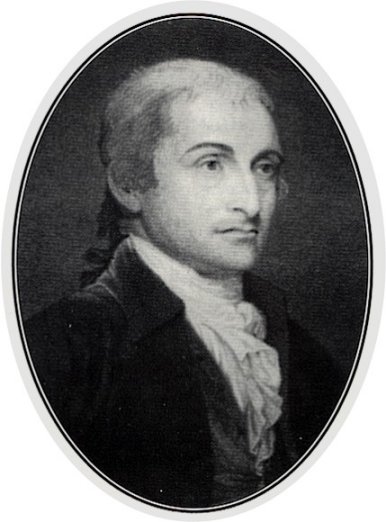
John Jay --- President of Congress; Diplomat; author of the Federalist Papers; original Chief Justice of the U. S. Supreme Court; Governor of New York
Condescend, merciful Father! to grant as far as proper these imperfect petitions, to accept these inadequate thanksgivings, and to pardon whatever of sin hath mingled in them for the sake of Jesus Christ, our blessed Lord and Savior; unto Whom, with Thee, and the blessed Spirit, ever one God, be rendered all honor and glory, now and forever.70
Unto Him who is the author and giver of all good, I render sincere and humble thanks for His manifold and unmerited blessings, and especially for our redemption and salvation by His beloved Son. . . . Blessed be His holy name.71
Mercy and grace and favor did come by Jesus Christ, and also that truth which verified the promises and predictions concerning Him and which exposed and corrected the various errors which had been imbibed respecting the Supreme Being, His attributes, laws, and dispensations.72
By conveying the Bible to people . . . we certainly do them a most interesting act of kindness. We thereby enable them to learn that man was originally created and placed in a state of happiness, but, becoming disobedient, was subjected to the degradation and evils which he and his posterity have since experienced. The Bible will also inform them that our gracious Creator has provided for us a Redeemer in whom all the nations of the earth should be blessed – that this Redeemer has made atonement “for the sins of the whole world,” and thereby reconciling the Divine justice with the Divine mercy, has opened a way for our redemption and salvation; and that these inestimable benefits are of the free gift and grace of God, not of our deserving, nor in our power to deserve. The Bible will also [encourage] them with many explicit and consoling assurances of the Divine mercy to our fallen race, and with repeated invitations to accept the offers of pardon and reconciliation. . . . They, therefore, who enlist in His service, have the highest encouragement to fulfill the du¬ties assigned to their respective stations; for most certain it is, that those of His followers who [participate in] His conquests will also participate in the tran¬scendent glories and blessings of His Triumph.73
I recommend a general and public return of praise and thanksgiving to Him from whose goodness these blessings descend. The most effectual means of securing the continuance of our civil and religious liberties is always to remember with reverence and gratitude the source from which they flow.74
The Bible is the best of all books, for it is the word of God and teaches us the way to be happy in this world and in the next. Continue therefore to read it and to regulate your life by its precepts.75
[T]he evidence of the truth of Christianity requires only to be carefully examined to produce conviction in candid minds… they who undertake that task will derive advantages.76
Providence has given to our people the choice of their rulers, and it is the duty as well as the privilege and interest of our Christian nation, to select and prefer Christians for their rulers.77
70) William Jay, The Life of John Jay (New York: J & J Harper, 1833), Vol. I p. 518, Appendix V, from a prayer found among Mr. Jay’s papers and in his handwriting.
71) William Jay, The Life of John Jay (New York: J. & J. Harper, 1833), Vol. I, pp. 519-520, from his Last Will & Testament.
72) William Jay, The Life of John Jay (New York: J & J Harper, 1833), Vol. II, p. 386, to John Murray, April 15, 1818.
73) John Jay, The Correspondence and Public Papers of John Jay, 1794-1826, Henry P. Johnston, editor (New York: Burt Franklin, 1890), Vol. IV, pp. 494, 498, from his “Address at the Annual Meeting of the American Bible Society,” May 13, 1824.
74) William Jay, The Life of John Jay (New York: J. & J. Harper, 1833), Vol. I, pp. 457-458, to the Committee of the Corporation of the City of New York on June 29, 1826.
60. John Jay, John Jay: The Winning of the Peace. Unpublished Papers 1780-1784, Richard B. Morris, editor (New York: Harper & Row Publishers, 1980), Vol. II, p. 709, to Peter Augustus Jay on April 8, 1784.
75) William Jay, The Life of John Jay (New York: J. & J. Harper, 1833), Vol. II, p. 266, to the Rev. Uzal Ogden on February 14, 1796.
76) William Jay, The Life of John Jay (New York: J. & J. Harper, 1833), Vol. II, p. 376, to John Murray Jr. on October 12, 1816.
